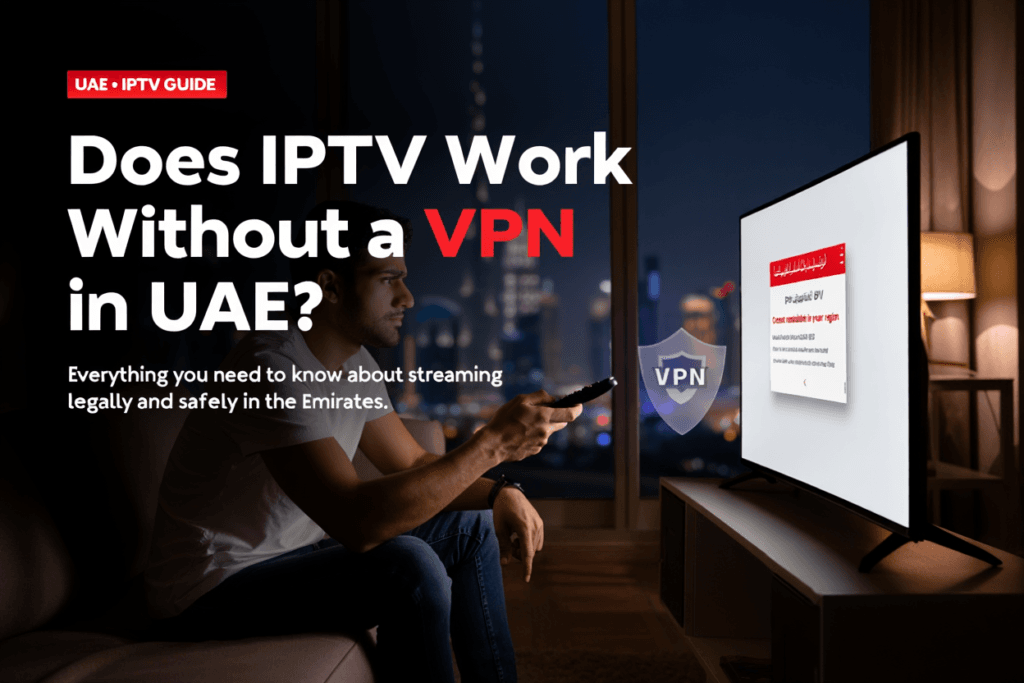
IPTV works without a VPN in UAE for licensed services, but many international providers face
connectivity restrictions from Etisalat and Du. Residents in Dubai often encounter buffering or “Connection
Refused” errors when accessing global content libraries directly. This happens because local internet
service providers (ISPs) manage bandwidth to protect proprietary VOD services. Understanding the digital
infrastructure in the United Arab Emirates is crucial for a smooth streaming experience. Whether you live
in Downtown Dubai or Dubai Marina, your internet connection is routed through strict gateways. These
gateways identify high-bandwidth streaming protocols typical of IPTV. Using a high-quality IPTV
subscription requires a stable handshake between your device and the server. In this guide, we analyze
why a VPN is often recommended despite the high-speed fiber optics available in the UAE. We explore the
technical hurdles of Etisalat and Du networks and how to maintain privacy while enjoying 4K streaming.
This ensures you get the value you paid for without constant interruptions.
Etisalat IPTV Traffic Management in Dubai
Etisalat utilizes Deep Packet Inspection (DPI) to monitor network traffic across the UAE. This technology
identifies IPTV streaming packets easily. When the ISP detects high-volume data from non-local servers, it
may throttle speeds.
DPI ensures that local bandwidth is reserved for essential services and official partner apps. For users in
Jumeirah, this often results in frustrating buffering loops during peak evening hours.
Streaming 4K content requires consistent throughput of at least 25Mbps. Even with a 100Mbps plan,
Etisalat may limit specific international routes. This makes direct IPTV connections feel sluggish or
unreliable.
Du Broadband and IPTV Server Restrictions
Du broadband users in Dubai Hills or Silicon Oasis face similar connectivity challenges with IPTV. Du
manages traffic to prioritize its own entertainment packages and licensed streaming partners like OSN+ or
TOD.
Many international IPTV servers are blacklisted by Du’s automated firewall systems. This prevents the initial
connection between your Smart TV and the content provider. A VPN bypasses these digital roadblocks
effectively.
Without a VPN, your IPTV traffic is visible to Du’s monitoring systems. They can see the source IP of your
streaming host. If that IP is flagged, your stream will likely fail to load.
Benefits of Using a VPN for IPTV in UAE
A VPN provides end-to-end encryption for your streaming data packets. This prevents Etisalat and Du from
seeing that you are using an IPTV service. Your traffic appears as standard encrypted web data.
By hiding your streaming activity, you avoid ISP throttling. This ensures that you get the full speed of your
Dubai internet connection. Smooth 4K streaming becomes much more achievable with encryption.
VPNs also allow you to change your virtual location. If an IPTV provider has a server in the UK, connecting
to a London VPN node reduces latency. This improves channel switching speeds significantly.
Best IPTV Channels in Dubai Marina and UAE
Residents in Dubai Marina demand high-definition sports and international news. Popular IPTV channels
include beIN Sports, Sky Sports, and various US network affiliates. Accessing these requires a robust
connection strategy.
The best IPTV providers offer multi-server redundancy. However, without a VPN, these backup links might
still be blocked by local ISPs. A VPN ensures you can reach every available backup server.
Local content from MBC and Dubai TV works perfectly without a VPN. However, for premium global
entertainment, the combination of a VPN and high-speed fiber is the gold standard in the Emirates.
Technical Setup for IPTV Without VPN Blocks
To set up IPTV correctly, first, choose a provider with a dedicated app. Apps often use proprietary ports
that are harder for Du or Etisalat to block compared to standard M3U links.
If you prefer not to use a VPN, consider using a Private DNS service. While not as effective as a VPN, a
custom DNS can sometimes bypass basic domain-level blocks on IPTV servers.
Hardwiring your streaming device with an Ethernet cable is essential. WiFi signals in high-rise Dubai
apartments often suffer from interference. A stable wired connection reduces packet loss during high-
bitrate streams.
Legal IPTV Options vs International Providers
In the UAE, services like Switch TV and Jawwy TV are fully legal. These work flawlessly without a VPN on any
Etisalat or Du connection. They are optimized for the local network infrastructure.
International IPTV services offer more variety but lack local support. If you choose an international
provider, a VPN becomes a necessary tool for reliability. It bridges the gap between Dubai and the world.
Users should always verify the terms of service for their chosen provider. While IPTV technology is legal,
the content rights vary. Ensure you are using services that respect intellectual property in the UAE.
Improving IPTV Stability on Du Fiber Networks
Du Fiber offers some of the fastest speeds in the Middle East. To maximize this, use a VPN protocol like
WireGuard. WireGuard is optimized for speed and works well with IPTV streaming demands.
Disable “IPv6” on your router settings if you experience connection drops. Many IPTV servers still operate
on IPv4, and IPv6 leaks can sometimes trigger ISP blocks in Dubai. This is a common fix.
Regularly clear the cache on your IPTV app. In the warm Dubai climate, streaming devices like Firesticks
can overheat. Proper maintenance ensures the hardware keeps up with the high-speed data stream.
Final Verdict: Is a VPN Required for IPTV?
While IPTV technically works without a VPN for local apps, it is highly recommended for international
services. A VPN ensures privacy, prevents throttling, and bypasses the strict firewalls of Etisalat and Du.
For the best experience in Dubai, invest in a premium VPN. This small monthly cost protects your
streaming freedom. It allows you to enjoy world-class IPTV channels without the frustration of buffering.
Ultimately, the choice depends on your content needs. If you only watch local UAE channels, you are fine.
For everything else, the VPN/IPTV combo is the only way to stream like a pro.